
What Is Kalaripayattu? A Beginner’s Guide
australia ayurveda beginner's guide flexibility functional movement healing health & wellness indian martial arts kalari yoga kalaripayattu kerala martial arts mobility online training self defence Aug 02, 2026What Is Kalaripayattu? A Complete Beginner's Guide
Have you ever wondered what Kalaripayattu is and why it is often described as one of the world's oldest martial arts?
Originating in the southern Indian state of Kerala, Kalaripayattu is far more than a system of self-defence. It is a complete practice that combines martial arts, mobility, flexibility, strength, coordination, breath awareness, meditation and traditional healing into one integrated discipline.
For centuries, Kalaripayattu was practised by warriors who trained not only to fight, but also to cultivate discipline, resilience, respect and self-awareness. Today, it continues to be practised throughout India and around the world by people seeking improved health, movement, confidence and a deeper connection to an ancient tradition.
Unlike many modern fitness programs, Kalaripayattu develops the whole person. Training includes flowing body movements, animal-inspired postures, partner work, weapon training, breath control and mental focus, making it suitable for people of many different ages and fitness levels.
Whether you're interested in learning a unique martial art, improving your mobility, developing functional strength or exploring the rich traditions of Kerala, this guide will introduce you to everything you need to know about Kalaripayattu.
In this guide you'll learn:
- What Kalaripayattu is
- The history and origins of Kalaripayattu
- Why it is often called the world's oldest martial art
- The physical and mental health benefits
- What happens in a typical class
- Whether beginners can learn Kalaripayattu
- How to find authentic Kalaripayattu training in Australia and online
What Is Kalaripayattu?
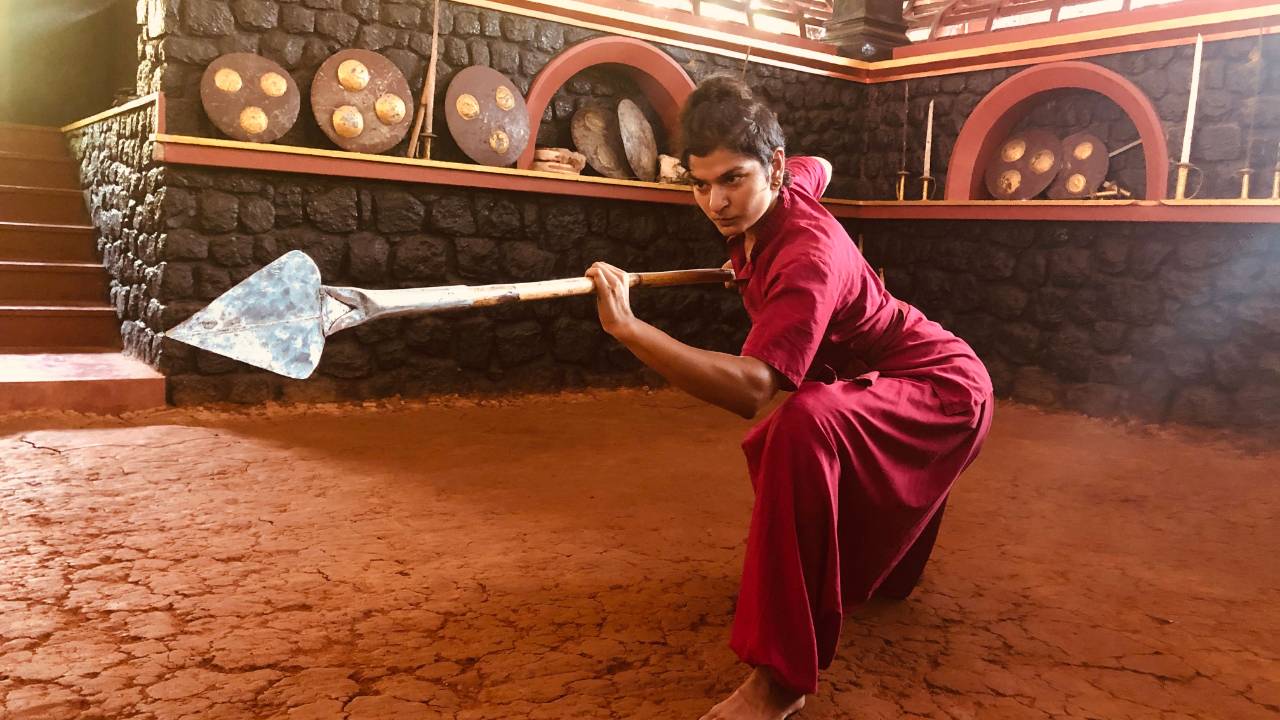
Kalaripayattu is the traditional martial art of Kerala, a state on the south-west coast of India. It is a complete system of movement that combines martial arts, physical conditioning, flexibility, weapon training, breath control, meditation and traditional healing practices.
The word Kalari means training ground or sacred practice space, while Payattu means practice, training or combat. Together, Kalaripayattu can be understood as "training in the Kalari."
Unlike many martial arts that focus primarily on fighting or competition, Kalaripayattu aims to develop the whole person. Students cultivate strength, agility, coordination, balance, flexibility, discipline and mental focus while learning traditional techniques that have been passed down through generations.
Training progresses through a structured syllabus. Beginners first learn body conditioning, stances and flowing movement patterns known as Meipayattu, before gradually progressing to partner work, empty-hand techniques, weapon training and advanced practices under the guidance of an experienced teacher.
One of the unique aspects of Kalaripayattu is its close relationship with Ayurveda, India's traditional system of medicine. Historically, Kalari masters were often skilled in both martial arts and healing, using massage, herbal medicine and marma (vital point) therapy to help prevent and treat injuries sustained during training.
Today, Kalaripayattu is practised by people of all ages and backgrounds. Some are drawn to its rich cultural heritage, while others appreciate its ability to improve mobility, strength, confidence, coordination and overall wellbeing.
For me, Kalaripayattu is much more than a martial art. It is a lifelong practice that develops the body, sharpens the mind and cultivates discipline, humility and resilience both inside and outside the training space.
The History and Origins of Kalaripayattu
Kalaripayattu has its roots in the southern Indian state of Kerala, where it has been practised for centuries as both a martial art and a way of life. While its exact origins are difficult to determine, it is widely regarded as one of the oldest surviving martial arts in the world, with a history that stretches back many hundreds of years.
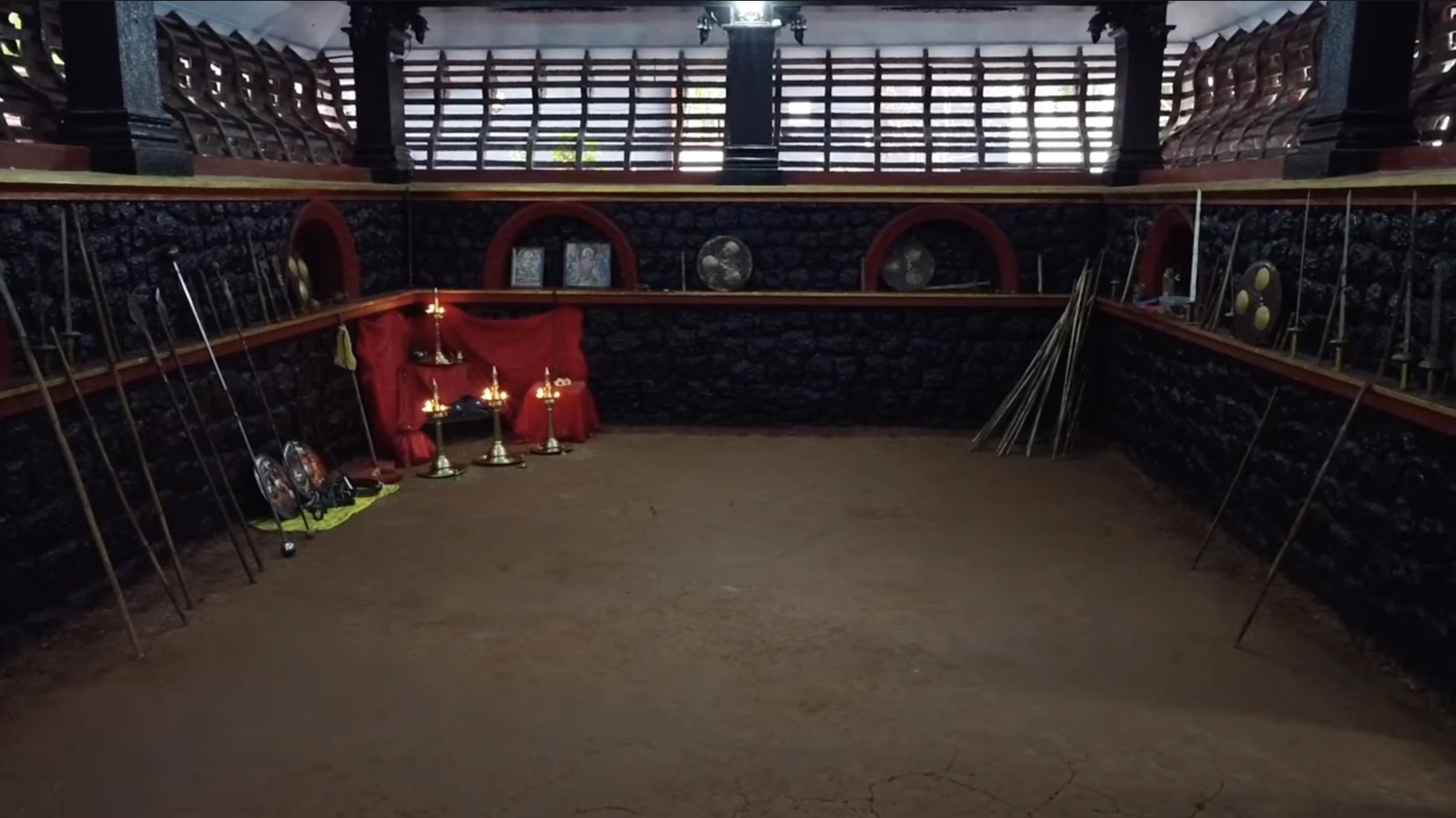
Traditionally, Kalaripayattu was taught within the Kalari—a purpose-built training space that was considered both a martial arts school and a place of learning. Students trained under the guidance of a Guru, developing not only physical skill but also discipline, humility, respect and self-control.
Historically, Kalaripayattu formed an important part of Kerala's warrior tradition. Warriors trained to defend their communities using empty-hand techniques, sticks, spears, swords, shields and flexible weapons such as the Urumi. Training was rigorous and progressive, with each stage building upon the previous one.
Over time, Kalaripayattu also became closely connected with Ayurveda, India's traditional system of medicine. Many Kalari masters were skilled healers who understood anatomy, herbal medicine and Marma Chikitsa (vital point therapy), enabling them to treat injuries and assist recovery after training or combat.
Although Kalaripayattu declined during periods of colonial rule, dedicated masters preserved the tradition and continued passing it from one generation to the next. Today, it is experiencing a resurgence both within India and internationally, with people recognising its value not only as a martial art but also as a powerful practice for health, movement and personal development.
I have had the privilege of studying Kalaripayattu in Kerala, India, under the lineage of Kalariyil Dharmikam Ashram, where the emphasis extends far beyond physical techniques. The training encompasses discipline, respect, traditional values, healing practices and continuous personal growth—principles that continue to shape the way I teach in Australia today.
Why Is Kalaripayattu Often Called the World's Oldest Martial Art?
Kalaripayattu is frequently described as one of the world's oldest martial arts, with a history that spans many centuries. While historians continue to debate the exact timeline of its origins, there is widespread recognition that it is among the oldest continuously practised martial traditions still taught today.
Ancient Kerala was home to a highly developed warrior culture, where martial training formed an important part of education. Students learned not only combat techniques but also physical conditioning, ethics, respect, discipline and traditional healing. This holistic approach is one of the reasons Kalaripayattu has remained relevant through the centuries.
Some historical accounts and traditional stories suggest that Kalaripayattu may have influenced the development of other Asian martial arts through cultural exchange and travel. While this idea is widely discussed, the historical evidence is not conclusive, and many scholars continue to debate the extent of this influence.
Regardless of its exact age, Kalaripayattu represents one of humanity's oldest living martial traditions. Unlike many modern martial arts that have evolved primarily as competitive sports, Kalaripayattu has preserved much of its original philosophy, training methods and connection to traditional Indian culture.
Today, students continue to train using many of the same principles that have been passed from teacher to student for generations. Respect for the Guru, dedication to regular practice, humility and continual self-improvement remain central to authentic Kalaripayattu training.
For many practitioners, learning Kalaripayattu is about more than mastering techniques. It is about becoming part of a living tradition that continues to connect people with centuries of knowledge, discipline and cultural heritage.
The Health Benefits of Kalaripayattu
Although Kalaripayattu is a martial art, many people begin training not because they want to learn to fight, but because they want to move better, feel stronger and improve their overall health.
Unlike many forms of exercise that focus on a single aspect of fitness, Kalaripayattu develops the body in a balanced and functional way. Every class combines strength, flexibility, coordination, endurance, balance and mental focus, creating a practice that supports both physical and mental wellbeing.
Improved Mobility and Flexibility
Kalaripayattu is well known for its flowing movements, deep stances and dynamic stretches that help improve joint mobility and flexibility throughout the body.
Rather than stretching in isolation, flexibility is developed through movement, helping the body become both mobile and strong.
Functional Strength
Training uses your own body weight through squats, lunges, animal movements, balances and dynamic transitions.
Over time, students develop practical, functional strength that supports everyday movement rather than simply building muscle for appearance.
Better Balance and Coordination
Many techniques require the body to move in multiple directions while maintaining stability and control.
As balance, coordination and body awareness improve, students often notice benefits that extend into everyday life and other physical activities.
Improved Cardiovascular Fitness
A typical class combines continuous movement with periods of higher intensity, naturally improving cardiovascular fitness and endurance while keeping training enjoyable and engaging.
Mental Focus and Confidence
Learning complex movement patterns requires concentration, patience and persistence.
As students gradually master new skills, many experience increased confidence, greater resilience and improved mental focus both inside and outside the training space.
Stress Relief
Like many mindful movement practices, Kalaripayattu encourages complete attention to the present moment.
The combination of movement, breathing and concentration can help many people disconnect from daily stress and leave training feeling calmer, clearer and more energised.
Healthy Ageing
Because Kalaripayattu develops strength, mobility, balance and coordination together, it can be an excellent lifelong practice.
Training can be adapted to suit different ages and abilities, allowing many people to continue practising well into later life.
For me, one of the greatest strengths of Kalaripayattu is that it is not simply about becoming a better martial artist. It is about developing a healthier, stronger and more capable body that supports you in every aspect of life.
What Happens in a Typical Kalaripayattu Class?
One of the questions I hear most often is:
"What actually happens in a Kalaripayattu class?"
Although every school has its own traditions and teaching style, authentic Kalaripayattu follows a progressive training system that develops the body step by step.
At Kalari Healing, classes begin by acknowledging the training space, your teacher and the lineage that has preserved this tradition for generations. This reminds us that Kalaripayattu is more than physical exercise—it is a practice of respect, discipline and continuous learning.
A typical class may include:
Warm-Up and Joint Preparation
Training begins by preparing the body through gentle mobility exercises, joint movements and dynamic stretches to increase circulation and prepare the muscles for movement.
Meipayattu (Body Conditioning)
Students learn flowing movement sequences that develop strength, flexibility, balance, coordination and endurance.
These foundational forms are the heart of Kalaripayattu and teach students how to move efficiently, safely and with control.
Chuvadu (Footwork and Forms)
Footwork develops agility, stability and the ability to move confidently in multiple directions.
Students gradually learn how each movement connects to practical martial applications.
Partner Training
As students progress, they begin practising techniques with partners in a safe and structured environment.
Partner exercises help develop timing, awareness, distance and control while building confidence.
Weapon Training
One of the most exciting stages of Kalaripayattu is learning traditional weapons.
Training progresses through a structured sequence, beginning with the Long Staff (Neduvadi) before advancing to shorter sticks, dagger, sword and shield, spear and more advanced weapons under the guidance of an experienced teacher.
Cool Down and Reflection
Classes often conclude with breathing practices, stretching or a short period of quiet reflection, allowing both body and mind to settle after training.
This balance between physical practice and mindful awareness is one of the qualities that makes Kalaripayattu unique.
Whether your goal is improved health, learning self-defence, connecting with Indian culture or simply enjoying movement, every class offers an opportunity to challenge yourself while learning in a supportive and respectful environment.
Is Kalaripayattu Suitable for Beginners?
Absolutely.
One of the biggest misconceptions about Kalaripayattu is that you need to be young, extremely flexible or already fit before you begin.
In reality, Kalaripayattu is designed to be learned progressively. Every student starts with the fundamentals, gradually developing strength, mobility, coordination and confidence over time.
At Kalari Healing, classes are structured so that beginners can learn safely while more experienced students continue to challenge themselves. You are never expected to perform advanced movements on your first day.
Whether you are 18 or 65, your training begins with building a strong foundation.
Do I Need Martial Arts Experience?
No.
Many students have never trained in a martial art before attending their first class.
Others come from backgrounds such as yoga, dance, Pilates, CrossFit, karate, Brazilian Jiu-Jitsu or other movement practices and enjoy learning a completely different way of moving.
Regardless of your experience, everyone begins by learning the fundamental movements correctly.
Do I Need to Be Flexible?
Not at all.
Improving flexibility is one of the outcomes of training—not a requirement before you start.
Kalaripayattu gradually develops mobility through natural movement patterns, deep stances and dynamic exercises that help improve flexibility while also building strength and stability.
Am I Too Old to Start?
Many adults believe they have "missed the opportunity" to learn a martial art.
Fortunately, this isn't true.
Training can be adapted to suit different ages, fitness levels and physical abilities. Progress is measured against your own starting point rather than anyone else's.
The goal is not perfection—it's consistent improvement.
Your First Class
Your first class is designed to be welcoming, supportive and enjoyable.
You'll be introduced to the basic principles of Kalaripayattu, learn some foundational movements and experience how the body moves through the practice.
Most people leave surprised by how different Kalaripayattu feels compared with other forms of exercise. It is challenging, but also deeply rewarding, and many students quickly discover that it becomes much more than simply a weekly workout.
Where Can You Learn Authentic Kalaripayattu?
As Kalaripayattu continues to grow in popularity around the world, more people are searching for authentic training outside of India. However, not all schools teach the traditional art or follow a recognised lineage, so it's worth taking the time to choose a school that values authenticity, safety and quality instruction.
When looking for a Kalaripayattu school, consider asking:
- Who is the instructor, and where did they train?
- Is the school connected to an authentic lineage in Kerala?
- Is the training suitable for complete beginners?
- Is there a structured syllabus that allows students to progress safely?
- Does the school teach the philosophy and traditions alongside the physical techniques?
- Are there opportunities to continue learning through workshops, retreats or online classes?
These questions can help you find a school that offers more than just martial arts techniques—it can provide a deeper understanding of the tradition and its cultural roots.
Learn Kalaripayattu with Kalari Healing
At Kalari Healing, we are proud to teach authentic Kalaripayattu through the lineage of Kalariyil Dharmikam Ashram in Kerala, India.
Our classes are designed to welcome complete beginners while providing a clear pathway for long-term development. Students learn traditional body conditioning, Meipayattu, footwork, self-defence, weapon training, Kalari Yoga and the philosophy that underpins this ancient martial art.
Training is available through:
- Weekly classes on the Sunshine Coast, Queensland
- Regular classes and workshops in Melbourne
- Online training with access to live classes and a growing video library
- Retreats and intensives that combine Kalaripayattu, Kalari Yoga, Ayurveda and traditional healing practices
Whether your goal is to improve your health, develop confidence, learn an authentic martial art or reconnect with movement, we welcome students of all ages and experience levels.
If you've always wanted to experience Kalaripayattu for yourself, there's no better way to understand it than by stepping onto the training floor.
Frequently Asked Questions
Is Kalaripayattu suitable for children?
Yes. Kalaripayattu can be an excellent activity for children when taught by a qualified instructor in an age-appropriate way.
Children develop coordination, balance, flexibility, confidence, focus and respect while learning through movement and structured practice. Rather than emphasising aggression, authentic Kalaripayattu teaches discipline, self-control and awareness.
Is Kalaripayattu good for adults over 40?
Absolutely.
Many adults begin Kalaripayattu later in life and are surprised by how adaptable the practice is.
Training can be modified to suit different levels of mobility, fitness and previous injuries, allowing students to progress safely at their own pace.
Many students find that Kalaripayattu helps improve strength, flexibility, balance and overall movement quality, making it an excellent long-term practice for healthy ageing.
Do I need to be fit before I start?
No.
Kalaripayattu helps you become fitter—it isn't something you need to prepare for beforehand.
Your instructor will guide you through movements appropriate for your current level, gradually building strength, mobility and endurance over time.
Is Kalaripayattu dangerous?
Like any physical activity, there is always some risk of injury. However, when taught by a qualified instructor using progressive training methods, Kalaripayattu is a safe and structured practice.
Students begin with foundational movements before progressing to partner exercises and weapons, ensuring skills are developed gradually.
How long does it take to learn Kalaripayattu?
Kalaripayattu is a lifelong practice rather than something that is mastered in a few weeks.
Most beginners notice improvements in movement, flexibility and confidence within the first few months, while developing advanced skills takes years of consistent practice.
The journey itself is one of the greatest rewards.
Can I learn Kalaripayattu online?
Yes.
Online training is an excellent way to begin learning the foundations, particularly if you do not have access to an authentic school nearby.
At Kalari Healing, students can join live online classes, access recorded lessons and follow a structured syllabus while learning from instructors connected to the traditional lineage of Kalariyil Dharmikam Ashram in Kerala.
Whenever possible, combining online learning with in-person workshops or retreats provides an even richer learning experience.
Is Kalaripayattu only about fighting?
Not at all.
Although Kalaripayattu is a martial art, it is equally a practice of health, discipline and personal development.
Many students train primarily for improved mobility, strength, flexibility, mental focus and overall wellbeing rather than self-defence.
The philosophy of Kalaripayattu encourages respect, humility and continual self-improvement.
Final Thoughts
Kalaripayattu is much more than an ancient martial art.
It is a living tradition that continues to develop stronger bodies, calmer minds and more resilient people through disciplined practice and authentic teaching.
Whether your goal is to improve your health, learn self-defence, explore Indian culture or simply challenge yourself in a new way, Kalaripayattu offers a unique path that integrates movement, mindfulness and tradition.
Having trained extensively in Kerala under the lineage of Kalariyil Dharmikam Ashram, I have experienced firsthand how transformative this practice can be—not only physically, but mentally and emotionally.
Today, it is my privilege to share this tradition with students throughout Australia and online, helping people discover an authentic martial art that has been passed down through generations.
If you've been curious about Kalaripayattu, I encourage you to experience it for yourself.
Your journey begins with a single class.
Experience Kalaripayattu for Yourself
Whether you're looking to improve your mobility, build functional strength, learn an authentic martial art or reconnect with your body through movement, we'd love to welcome you.
Kalari Healing offers:
- 3 Weekly classes on the Sunshine Coast
- Regular weekly classes in Melbourne
- Live online classes
- A comprehensive online learning portal
- Workshops and retreats throughout Australia
- A 7-Day Free Trial for the online Kalari Learning Portal for new students
Ready to begin?
Join the Waitlist for the upcoming Hypothyroid Success Method e-course
Learn how to overcome Hypothyroidism and become the boss lady you have always dreamed of being!
We hate SPAM. We will never sell your information, for any reason.
Recent Posts
Categories
All Categories australia autoimmune disease ayurveda beginner's guide brain fog causes energy fatigue flexibility functional movement gut health hair loss hashimoto's hashimoto's disease healing health & wellness holsitic health hypothyroidism hypothyroidism autoimmune disease indian martial arts kalari yoga kalaripayattu kerala martial arts mobility naturopathy online training self defence thyroid blood tests thyroid health thyroid symptoms weight loss women's health
